
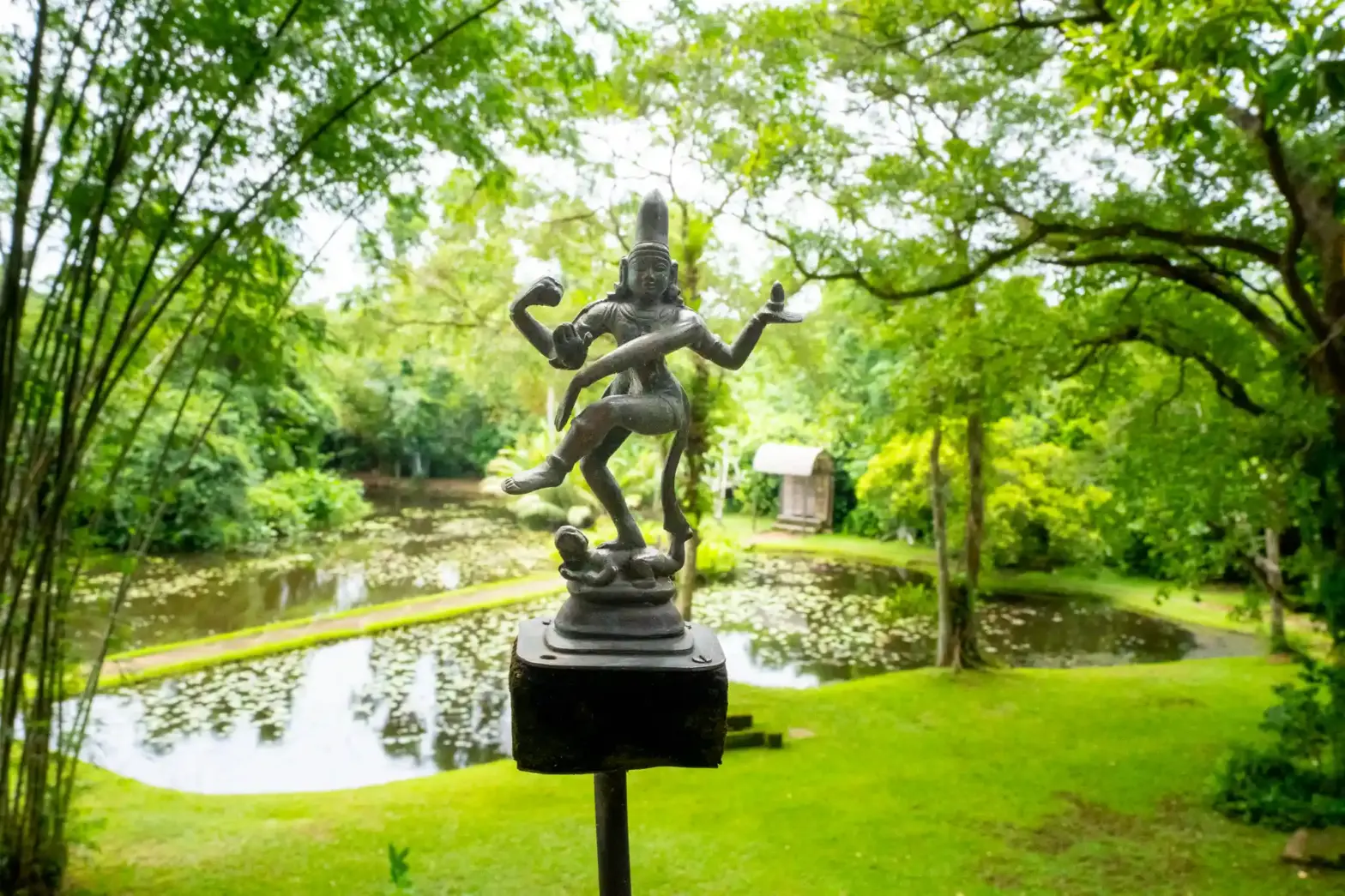
This is Lunuganga. A masterpiece of spatial theatre engineered over half a century by Geoffrey Bawa, the visionary widely revered as the father of tropical modernism.
The journey yields no subtle whispers of what awaits. Veering off the Galle road past the gentle swells of the Bentota River, a narrow path winds through quiet villages and dense rubber thickets. Asphalt surrenders to red laterite earth. Paddy fields ripple in the humid breeze. A wooded hill looms ahead, guarded by a gateway so buried in foliage that one might easily pass it by without a second glance. Yet as your vehicle ascends through the canopy and you alight upon the southern terrace of an unpretentious plantation bungalow, the earth suddenly unfolds. A long green corridor of trees stretches toward a silver ribbon of water, and far on the horizon, the gleaming white dome of a Buddhist stupa rests precisely framed like a priceless canvas.
From Bar to Benchmark
Today Bawa is celebrated globally for providing newly independent Sri Lanka with an architectural vernacular that was resolutely modern yet deeply rooted in local traditions. Born in Colombo in 1919 to a wealthy family of mixed heritage, Bawa originally read English at Cambridge and qualified as a barrister in London. In 1948, after Sr Lanka gained independence from British rule, Bawa returned to the island and purchased a neglected rubber estate occupying a promontory on Dedduwa Lake. The land had known cinnamon cultivation under Dutch rule and rubber production under the British. It comprised twenty five acres of depleted soil and a single modest bungalow offering a limited view across the lagoon.
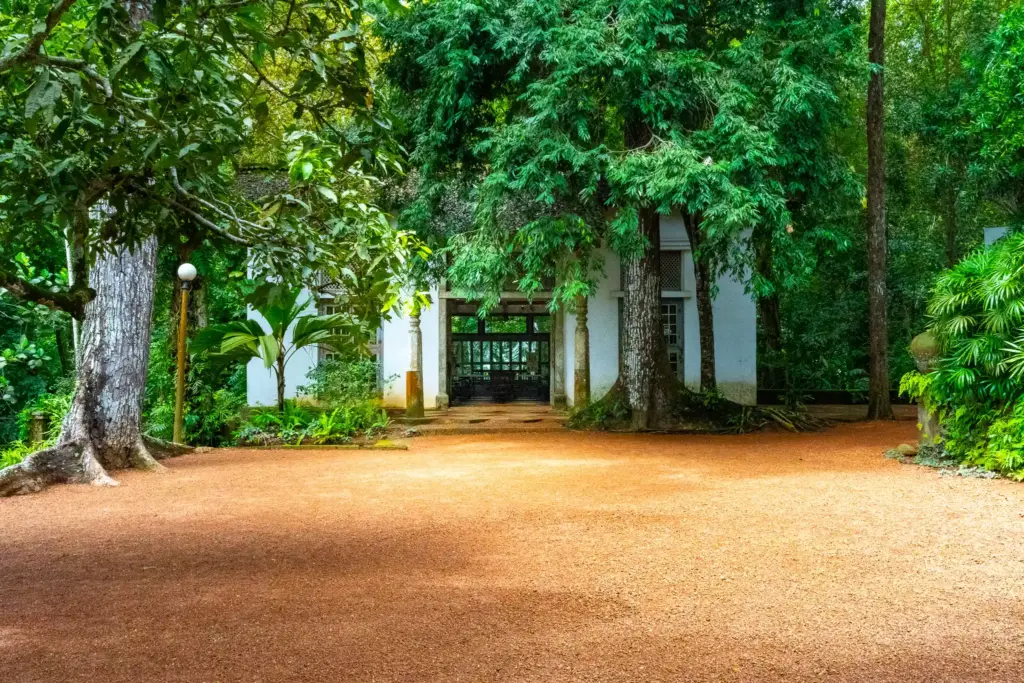
Renaming the estate Lunuganga, Sinhala for salt river, in homage to the brackish waters encircling the grounds, Bawa set out to create a tropical rendition of an Italian garden. He soon recognized his lack of formal design expertise, a realization that prompted him to return to London to study at the Architectural Association. He qualified at thirty eight, embarking on a brilliant career that transformed regional architecture. Yet Lunuganga remained his ultimate personal laboratory, a site he refined continuously until his passing in 2003, when his ashes were interred upon its serene Cinnamon Hill.
A Symphony in Green on Green
Architectural connoisseurs coming to Lunuganga must leave behind expectations of traditional floral displays. Here is a garden composed entirely in shades of green on green, described by architectural historians as a civilized wilderness. The true subject of Lunuganga is not horticulture; it is the mastery of perspective and light.
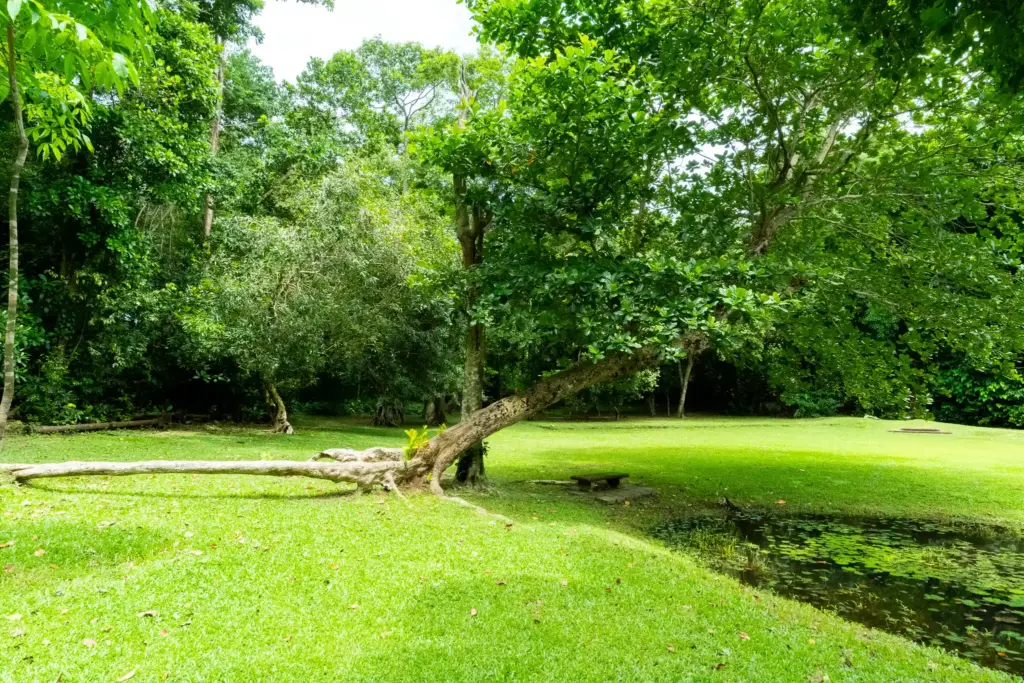
Bawa transformed the estate into a boundless universe by sculpting the terrain into a sequence of distinct outdoor rooms, each possessing its own unique atmosphere, mood, and alignment with the sun.
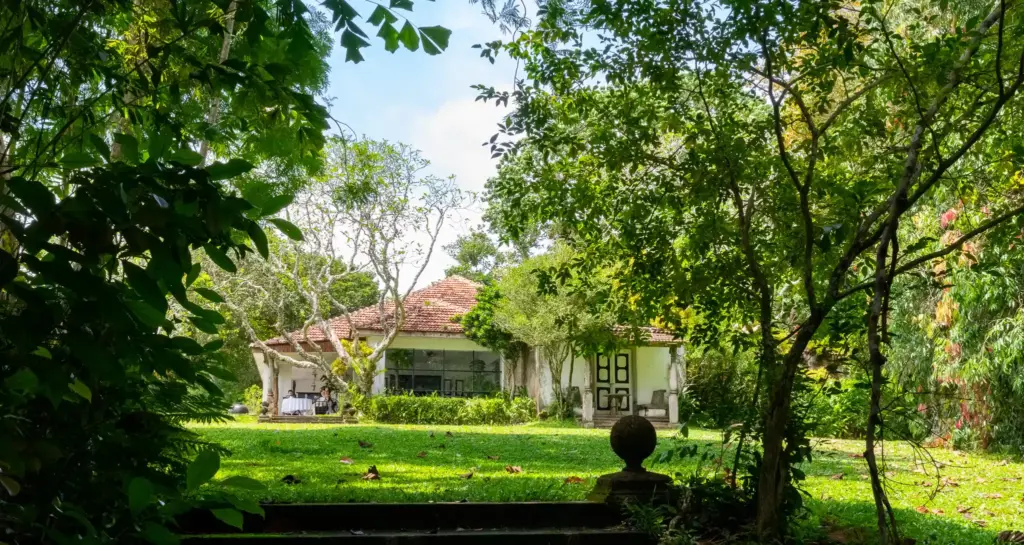
The southern vista offers the most breathtaking example of this spatial alchemy. Bawa lowered Cinnamon Hill and submerged the estate road inside a concealed trench, eliminating any visual interruption between the terrace and the distant Katakuliya temple stupa.
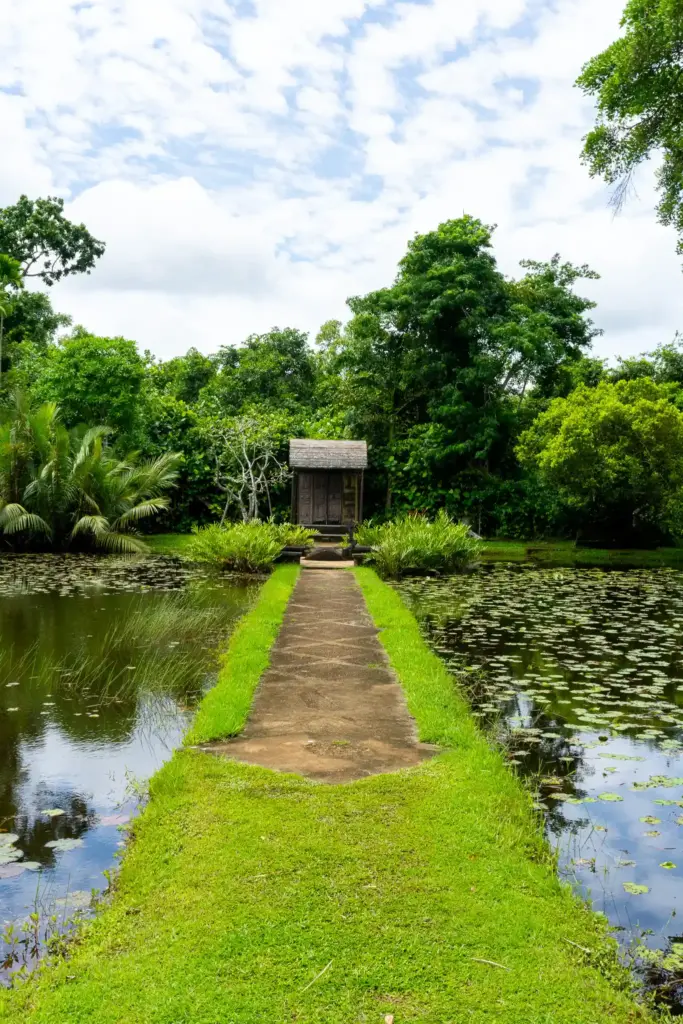
The Broad Walk glides beneath ancient frangipani trees toward lily ponds and the Black Pavilion, a secluded stone sanctuary where Bawa enjoyed afternoon tea. Below the northern terrace, steps known as the Scala Danese descend to emerald paddy fields by the water. To the west, rolling lawns give way to the Field of Jars, where massive Ming style vessels flank a quiet reflecting pool. Near the shore, the Water Gate remains a romantic launching point for boats heading to nearby islands.
Art as Punctuation
Works of art gathered during Bawa’s international travels sit alongside creations by his esteemed circle of artistic collaborators, including Barbara Sansoni, Laki Senanayake, and Donald Friend. Nothing is arranged as a museum display; instead, sculpture serves as poetic punctuation.
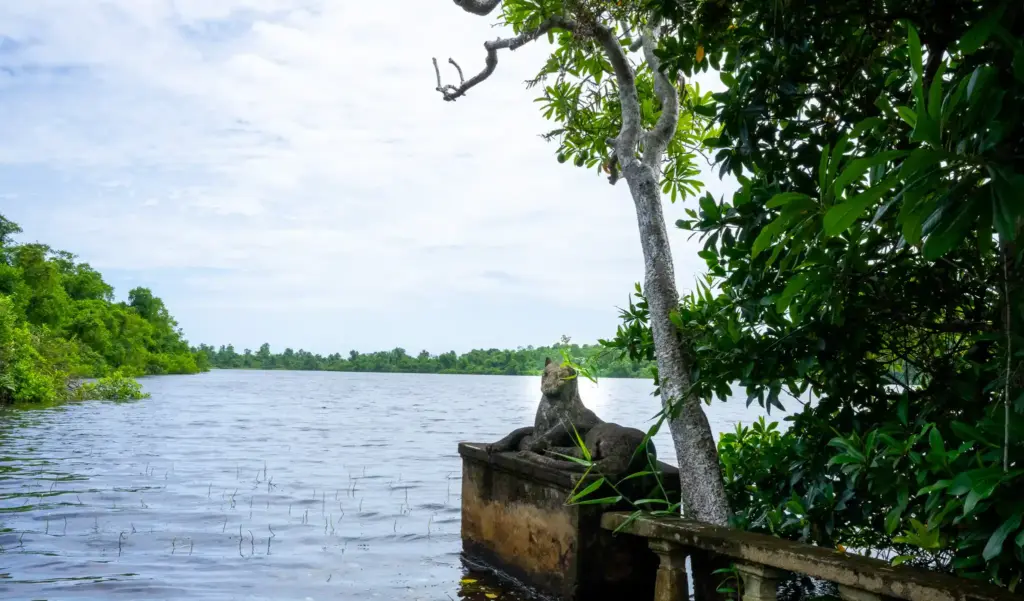
A sculpted stone leopard rests quietly in the dappled shade near the lake. A whimsical stone Pan, crafted by a local artisan, grins from the edge of the rice fields.
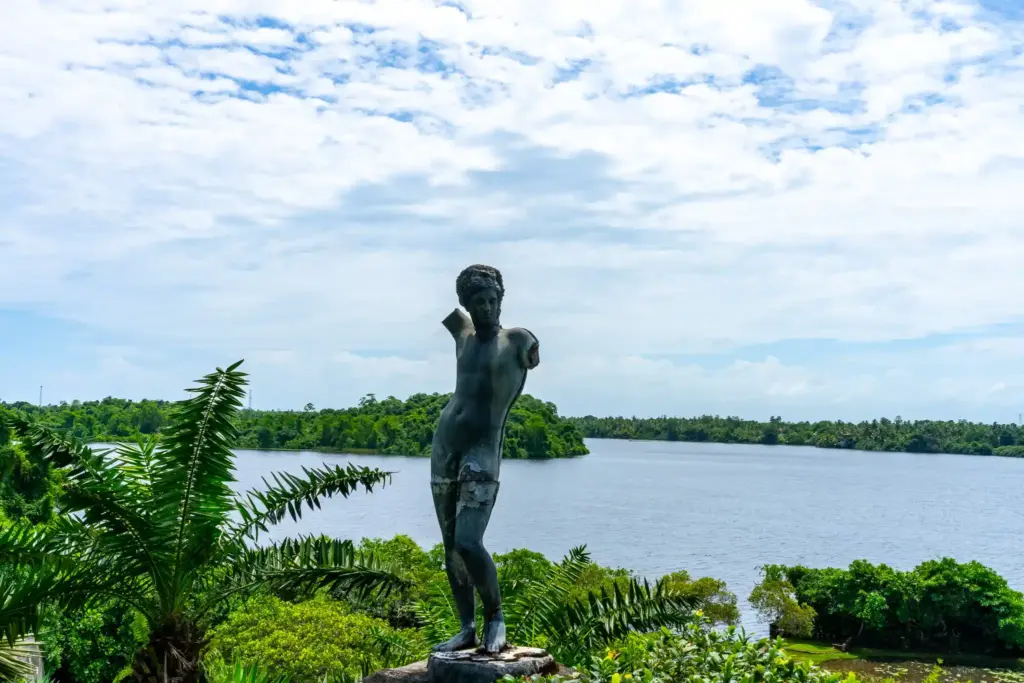
On a stone bench above Dedduwa Lake, twin miniature replicas of Michelangelo’s David gaze across the water, a nostalgic nod to the Italian villa Bawa never bought.
An Enduring Architectural Sanctuary
At its core, Lunuganga represents a profound collaboration with nature. While hills were recontoured and trees carefully trained, the resulting landscape feels entirely organic. By replacing a monoculture rubber plantation with diverse indigenous flora, Bawa restored a thriving ecosystem that now harbors dozens of bird species.
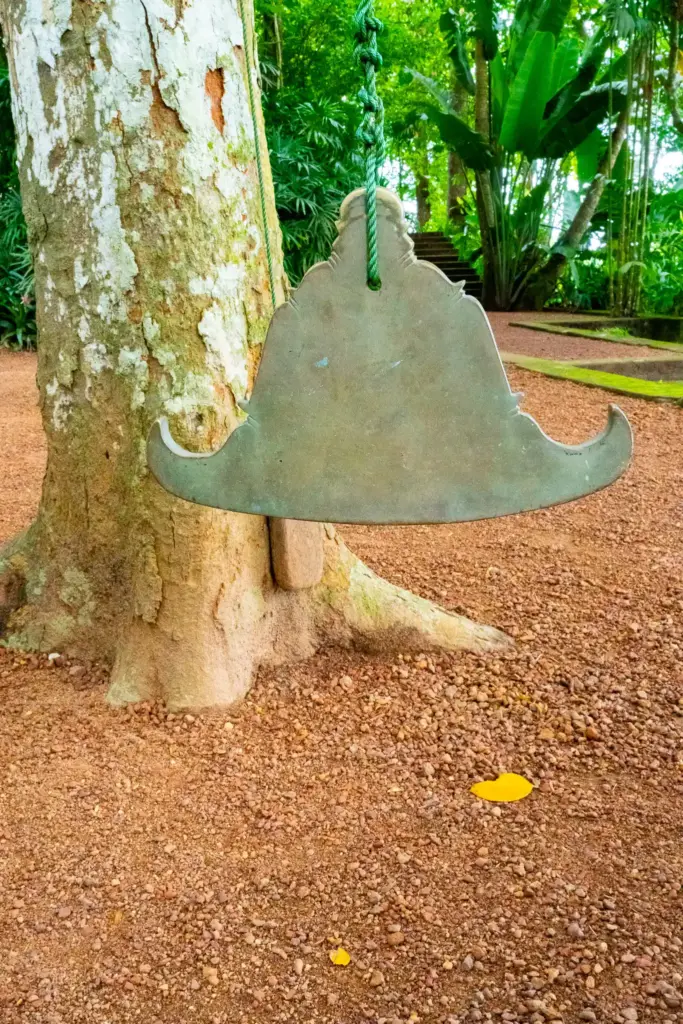
To wander through Lunuganga is to understand that Bawa never truly finished his work here, he simply allowed time and nature to take over the mantle of co-creator. Long after the afternoon light fades across the waters of Dedduwa Lake, the quiet geometry of this sanctuary lingers in the mind, a vivid reminder that the finest luxury in travel is not merely what we see, but how a place teaches us to see the world.
Recent Comments