
Beyond the beach clubs lie hilltop shrines, tin merchant mansions and the best meal you will eat standing up. Harmeet Sehgal checks out Phuket – an island most of us think we already know.
There is an hour in Phuket, just before the sun goes, when the light thickens and the whole island seems to exhale. I spend my first one of these at Café del Mar, at the northern end of Kamala Beach, with something cold in hand and no particular ambition.
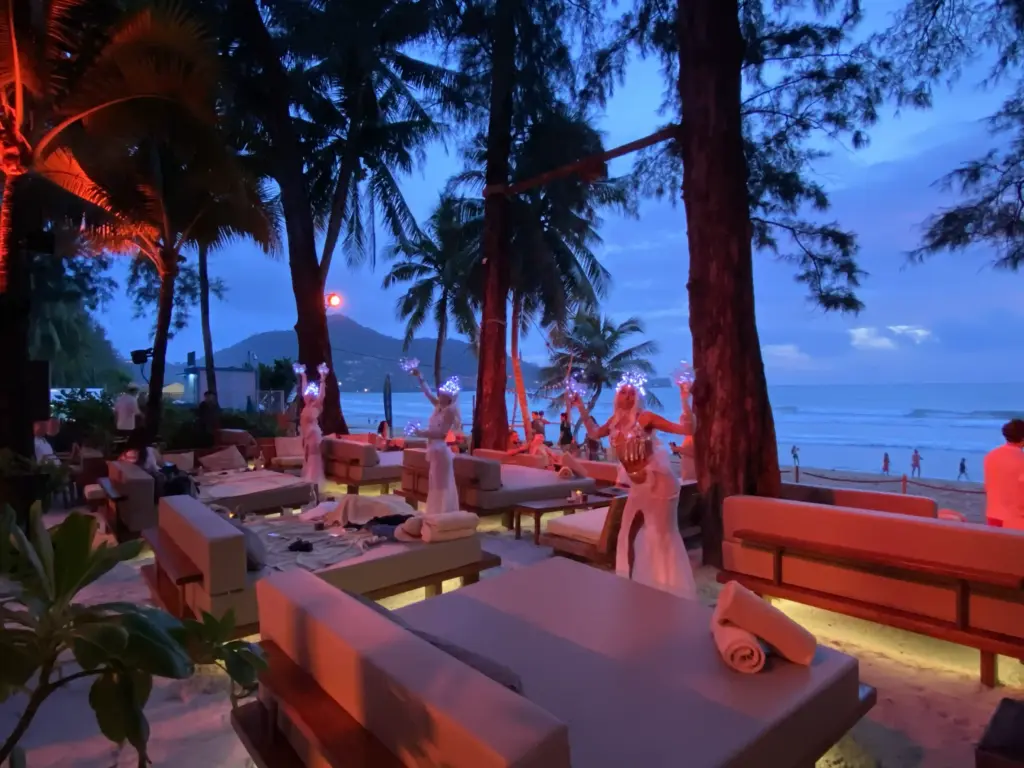
The name arrived on this coast in 2017 and chose its ground with care. Kamala rather than Patong. Long and quiet rather than loud and lit. There is a pool set back behind a thatched bar, day beds pressed into the sand, a wood fired oven somewhere out of sight, and a west facing horizon that needs no help from anyone.
The music rises as the light falls, which is the whole trick of the place. By nine the beds are full and nobody has looked at a watch in hours. I begin here because this is the Phuket most New Zealanders carry in their heads. It is also only the first chapter.
The hill and the leaves
The following morning belongs to higher ground. I climb to a small shrine on the hillside, where the air finally moves and the Andaman Sea lies below like beaten metal, then continue up the winding road to Nakkerd Hill.
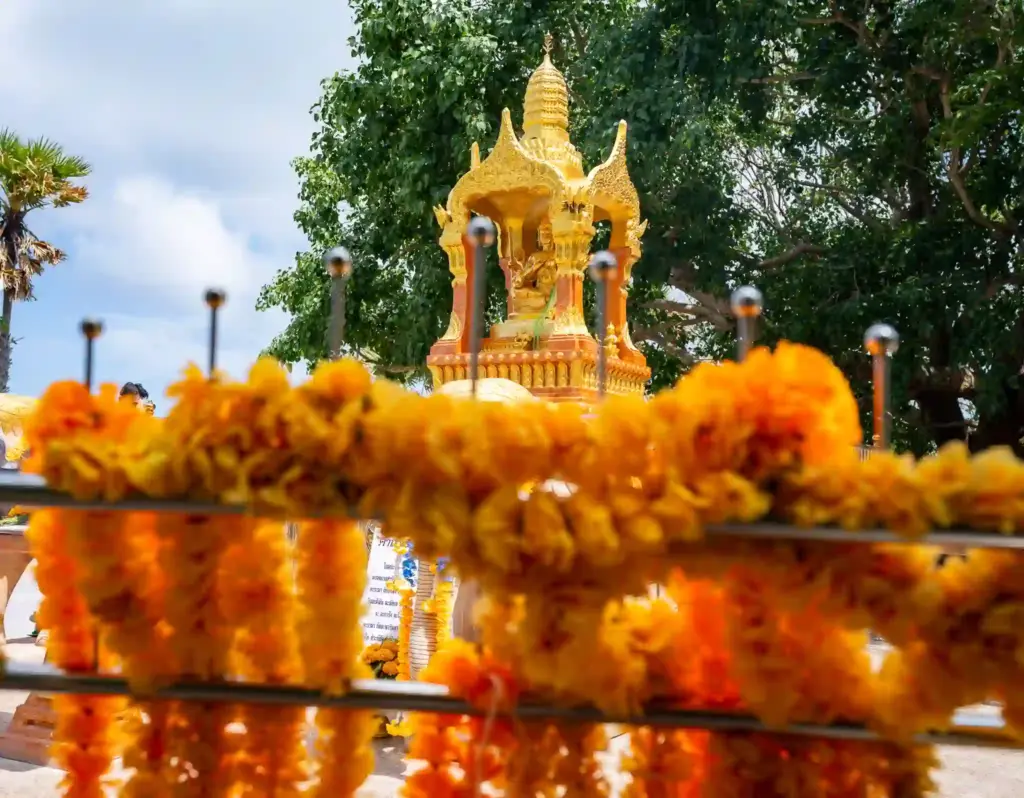
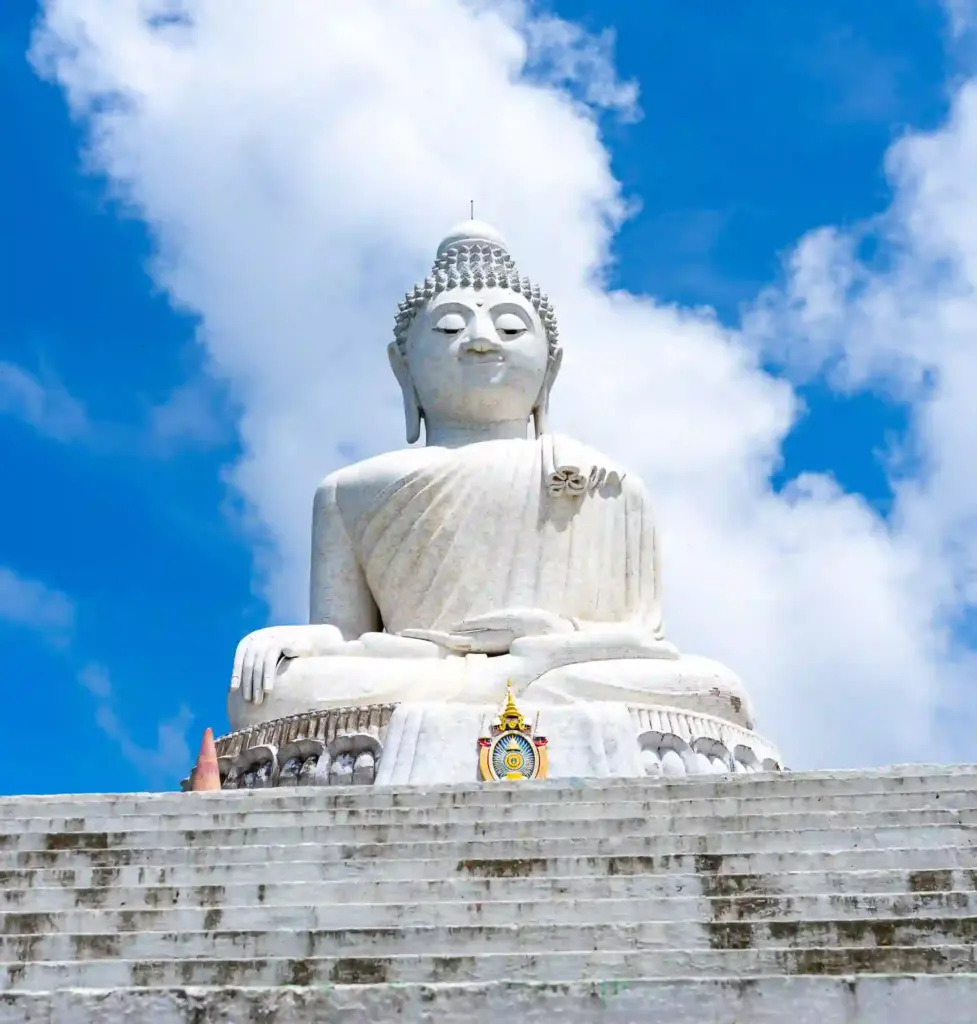
Nothing prepares you for the scale of what waits at the top. Phra Phuttha Mingmongkhon Akenakkhiri (Giant Buddha) is 45 metres of white Burmese marble, raised across more than two decades and paid for entirely by donation, visible from almost every beach in the south of the island. From the terrace at its base you get Phuket whole, Chalong Bay directly below, Kata and Karon along the coast, green ridges folding away inland.
What stays with me is smaller than any of that. Along the railings in front of the Buddha hang thousands of gilded leaves on strings, each carrying a message written by hand. Hopes, mostly.
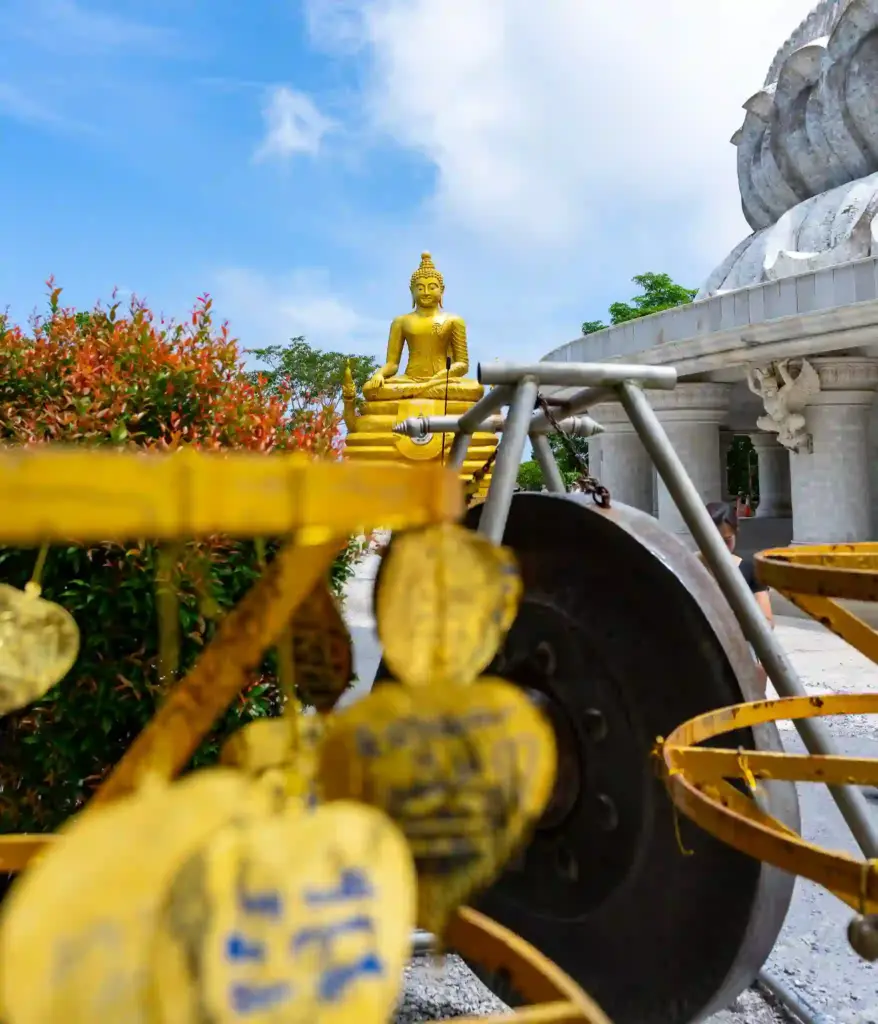
The names of people who are loved. When the wind comes up the hill they move together, and the sound sits somewhere between rain and applause. The site was closed for eighteen months after a landslide in 2024 took thirteen lives, and reopened only in March. There is a particular quality to the quiet up there now.
The Monks of Wat Chalong
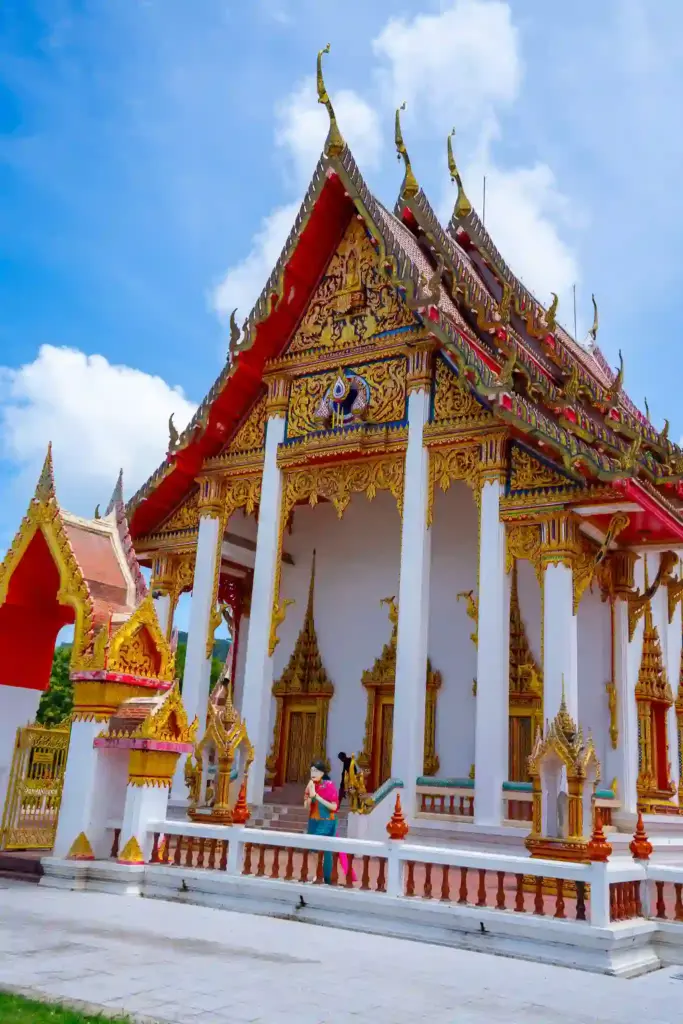
Ten minutes downhill, Wat Chalong rises in red and orange and white, and it repays knowing why Thai visitors come here in such numbers.
In 1876 the Chinese labourers working Phuket’s tin mines rose against their conditions and the island turned violent. Two monks at Chalong, Luang Pho Chaem and Luang Pho Chuang, opened the temple to anyone who needed it and treated the wounded with herbal medicine.
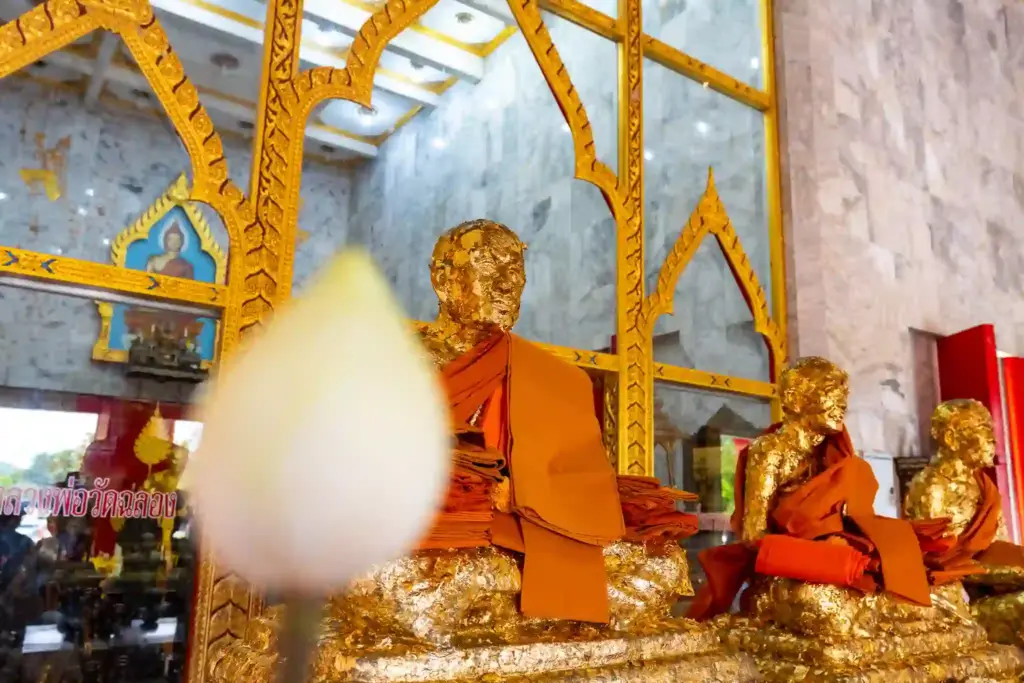
King Rama V later granted Chaem a royal title. A century and a half on, his likeness sits in the hall beneath so many layers of pressed gold leaf that the features have gone soft. People still queue to add more. Behind it, a chedi of 60 metres holds what is said to be a fragment of the Buddha’s bone.
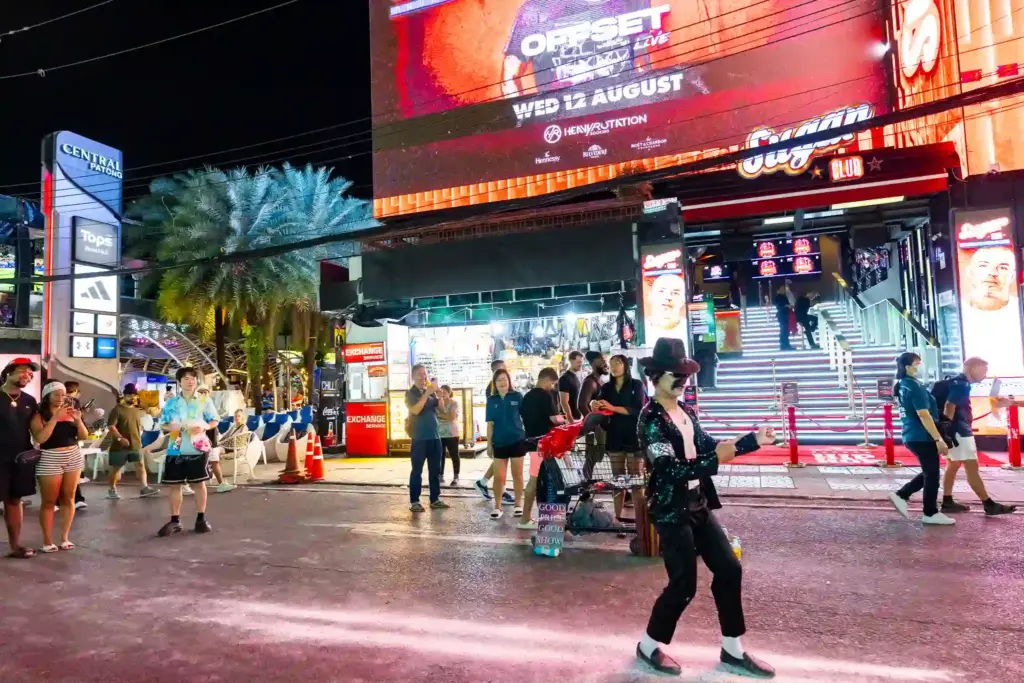
That night I go to Bangla Road in Patong, briefly, because it would be dishonest not to.
Neon, volume and pure appetite, enjoyable for precisely as long as you want it to be. Then a taxi back over the hill, windows down, chilli smoke giving way to salt air.
Old Town, and the best meal of the trip
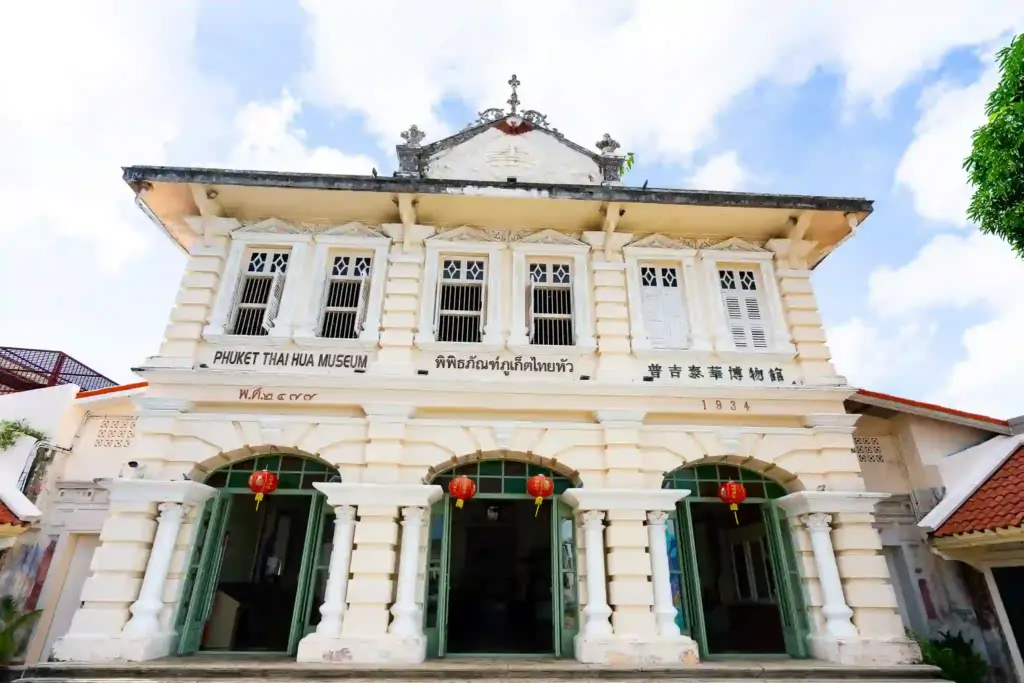
Phuket Town is where the island keeps its memory. On Krabi Road, in Talat Nuea, stands a two storey Sino Portuguese mansion built in 1934 by Hokkien Chinese families whose fortunes came out of tin. It opened as the first Chinese language school on the island, taught local children for more than sixty years, and became the Phuket Thai Hua Museum in 2010.
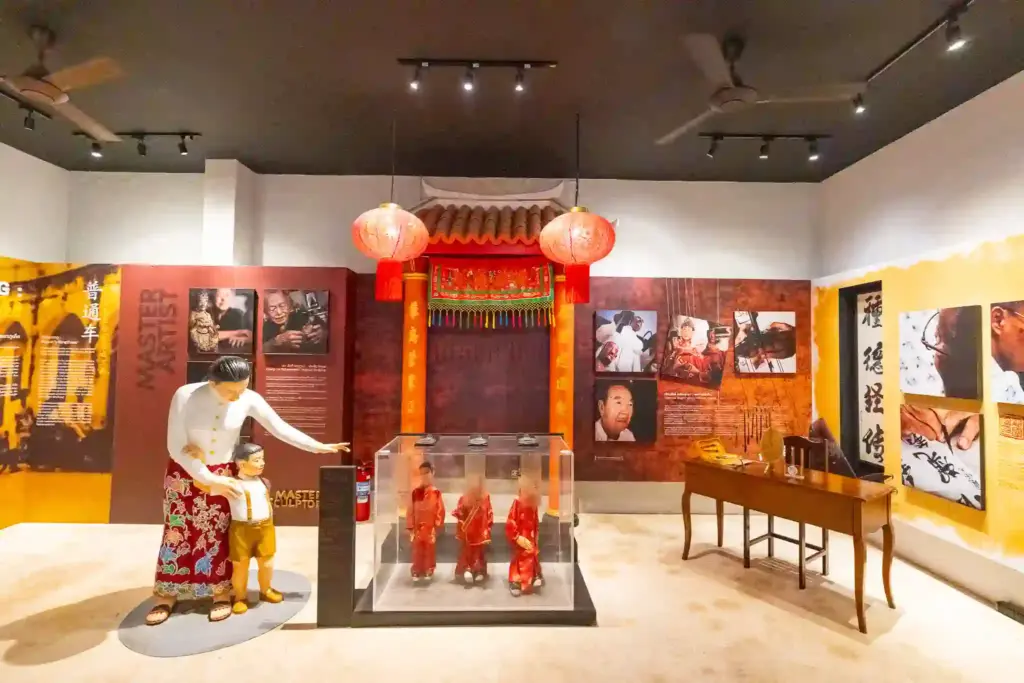
Thirteen rooms of immigration papers, family portraits and mining machinery, and an hour inside changes everything you see when you step back onto the street.
Which, on a Sunday, is closed to cars. Thalang Road becomes Lard Yai, and I eat the best meal of the trip standing up in the middle of it.
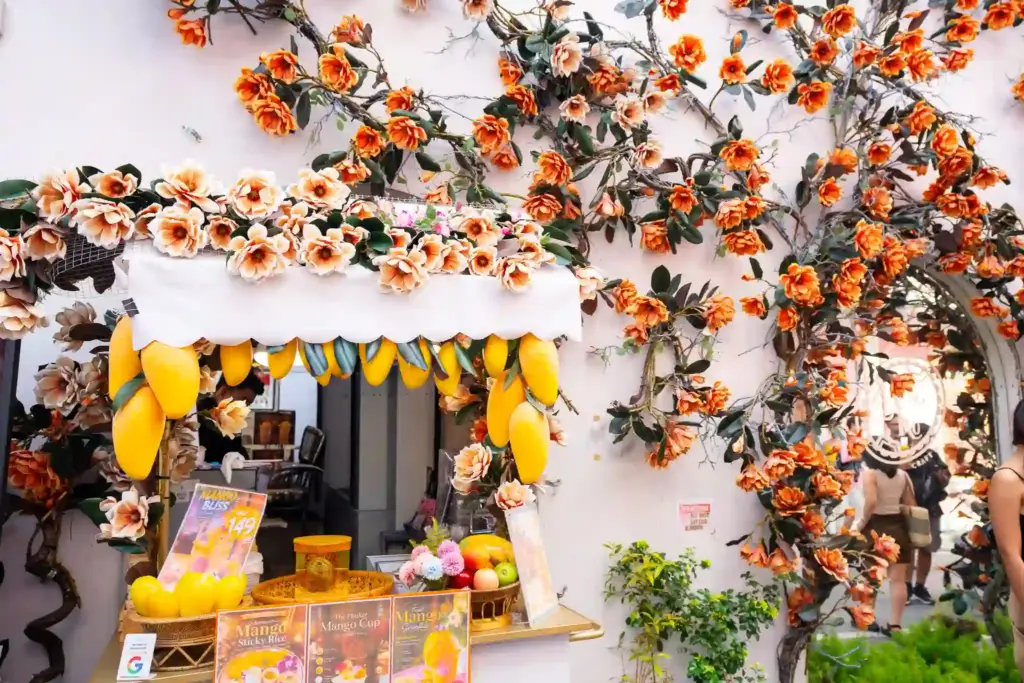
A mango slushy first, fresh fruit blended with coconut milk and finished with more mango, which is not optional.
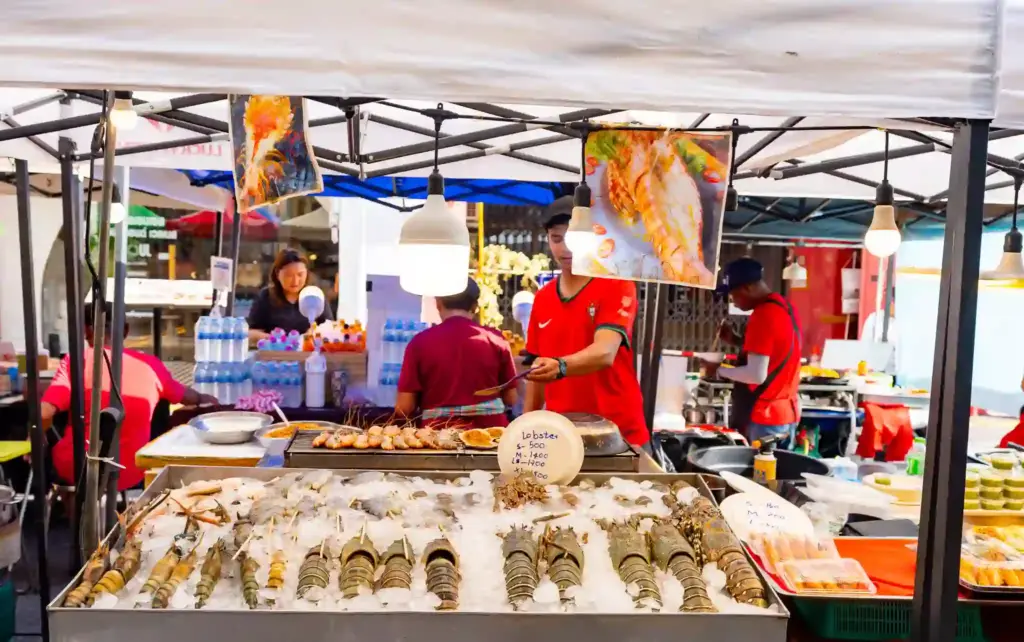
Then whole red snapper, deep fried and dressed with chilli, ginger, garlic and lemongrass, lime squeezed over at the last moment, as fresh as any fish I have eaten anywhere. Jumbo prawns off the charcoal, glazed with sweet chilli and scattered with fried garlic. Mango and sticky rice to close, because there is no other way to close.
The quiet end of the beach
I am staying at Kora Beach Resort, on the upper reach of Bang Tao where it runs towards Layan, twenty five minutes from the airport and a world away from Patong.
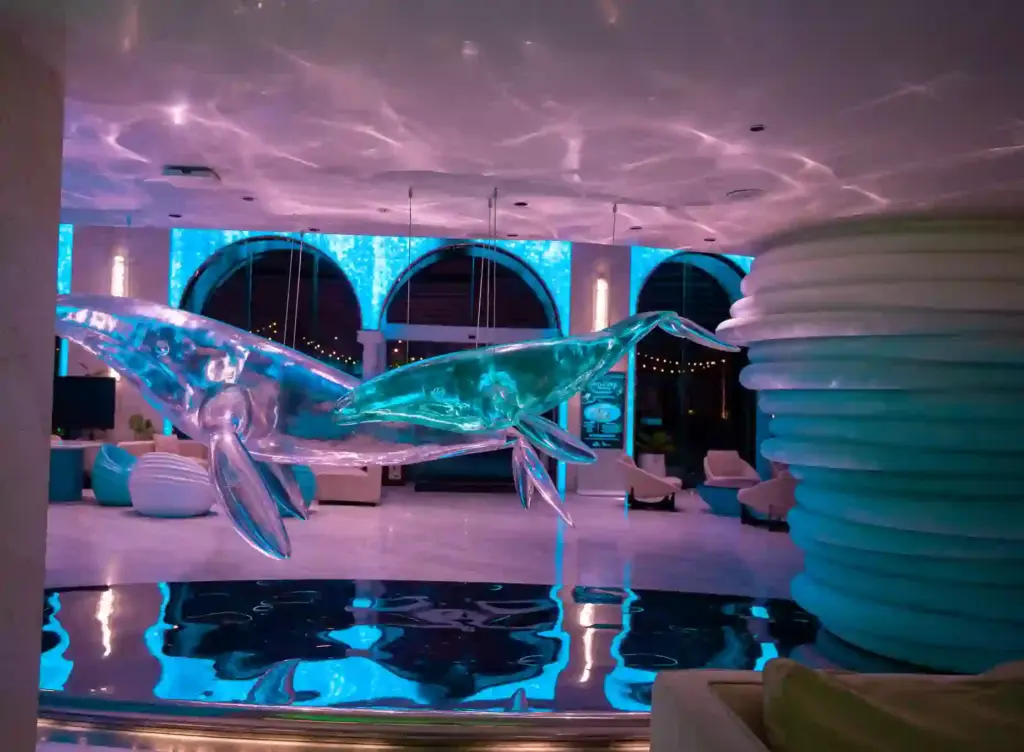
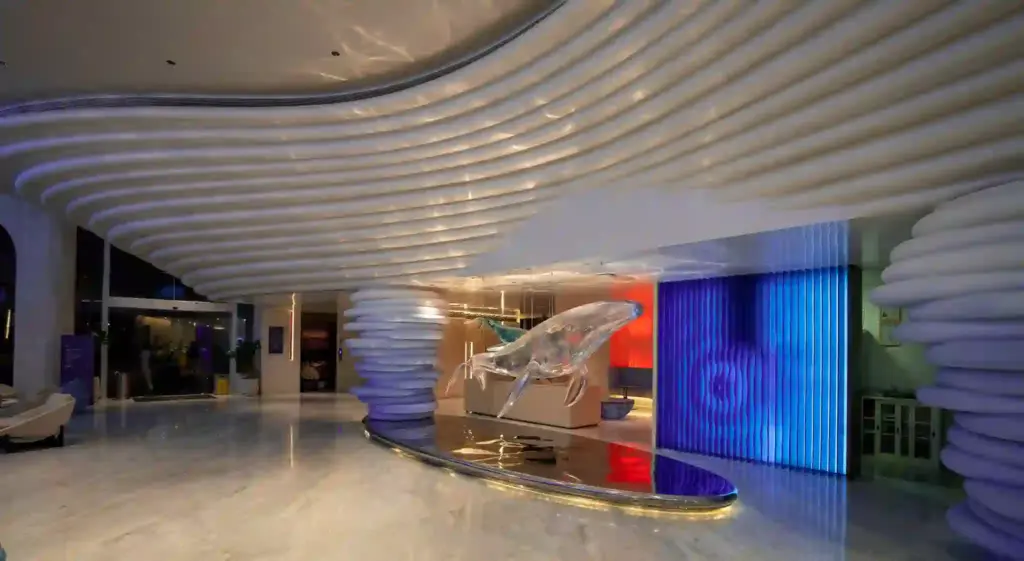
You understand the building’s intentions in the lobby, before anyone has taken your bag. It has been designed as a coral reef, circular pillars rising like stone columns through water, and suspended from the ceiling a crystal mural of a whale and her calf, hung so delicately that it seems to be drifting rather than fixed. Everyone stops. Nobody quite means to.
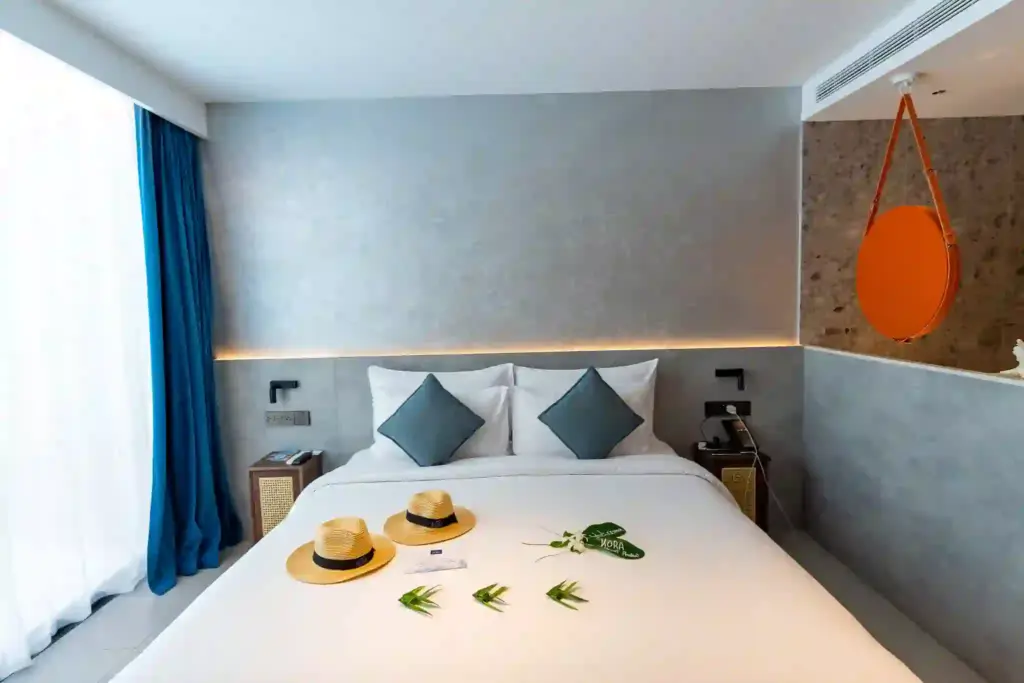
My room is a Premier Pool Access, thirty square metres with a king bed and a terrace that opens directly onto water. It sounds like a small thing and turns out to be a large one. Nothing stands between waking and swimming. You step out and you are in.
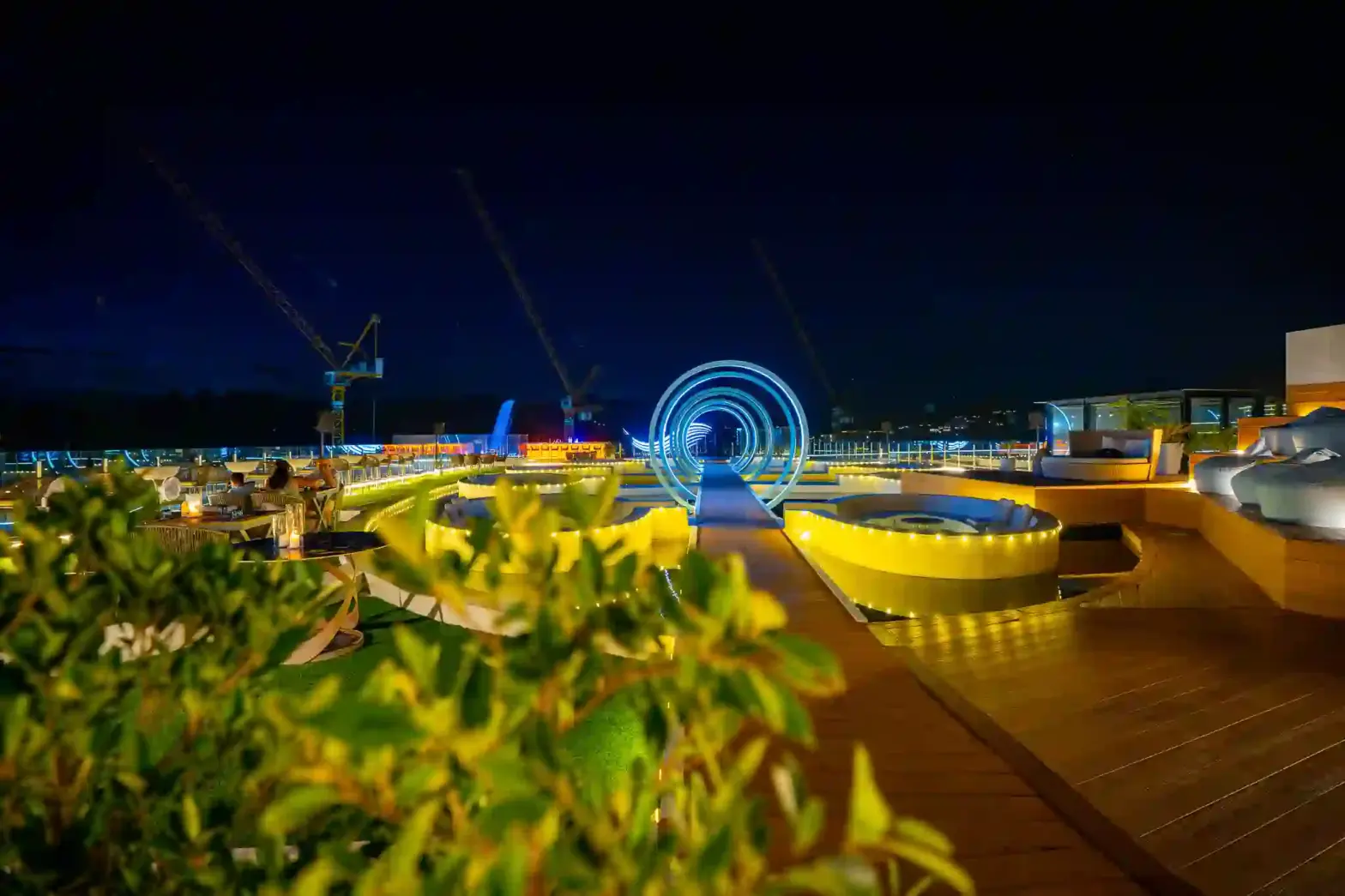
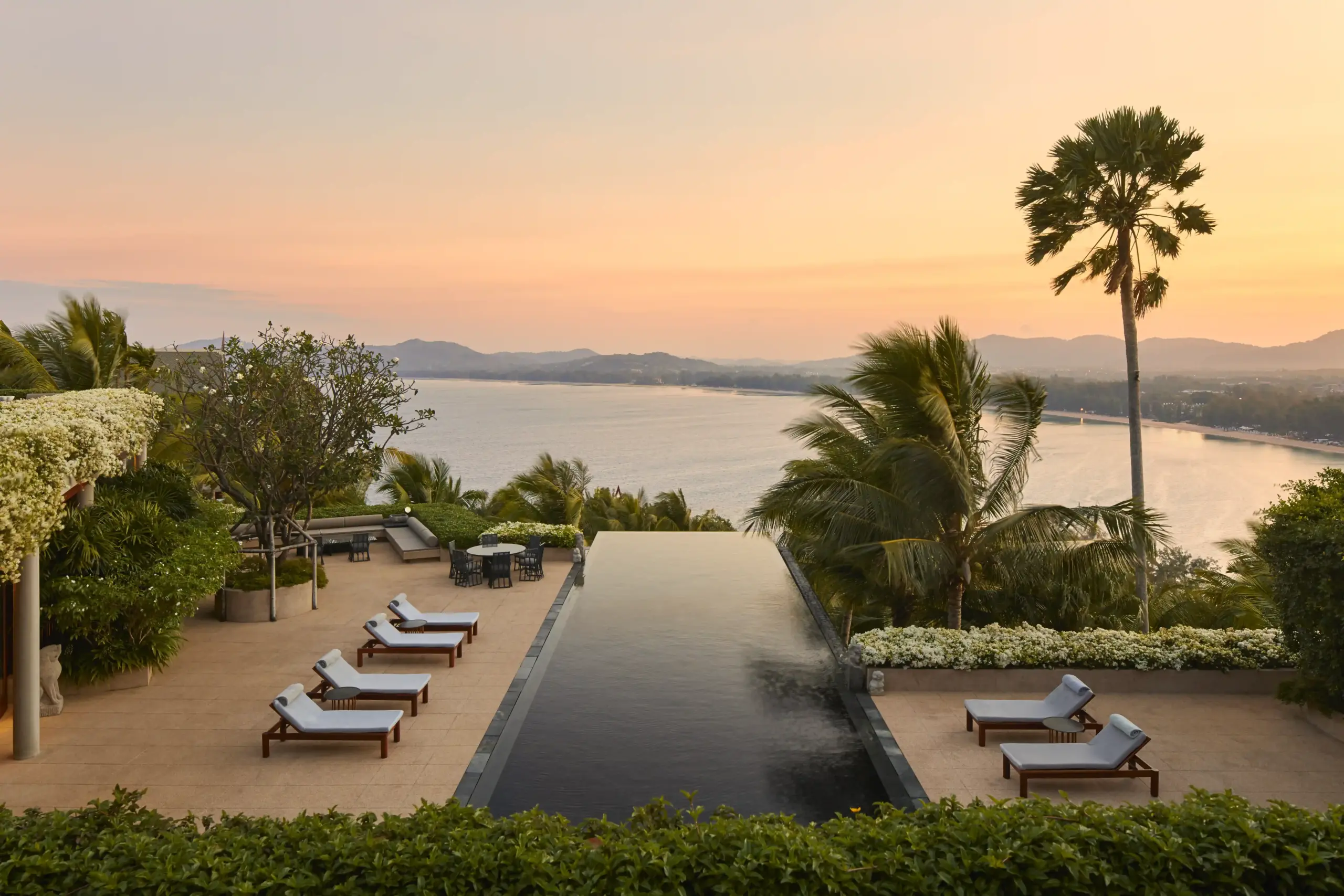
The resort’s finest hour, though, is on the roof. Kora Sky opens at half past five and is unlike anything else I saw on the island: neon rings, shallow water pools, circular island seating arranged as though in orbit, and a walkway down the centre lit by hoops of neon that you pass through one after another until you have pleasantly lost your bearings.
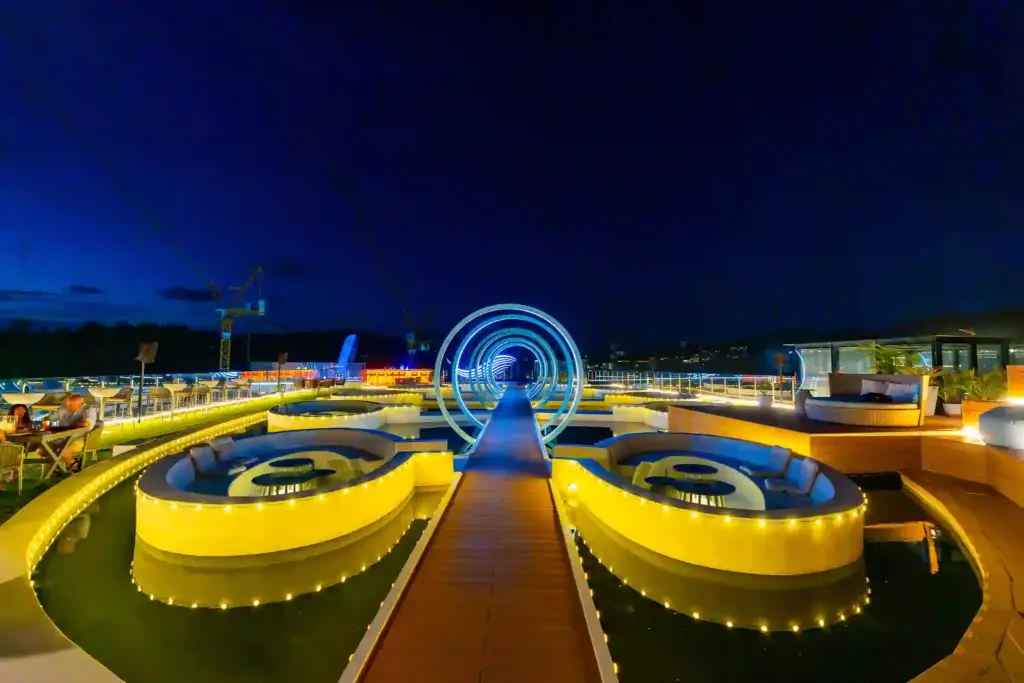
It should be too much. Somehow it is not. There are small plates worth taking seriously, a long drinks list and the entire west coast turning gold in front of you. Miss Universe chose this rooftop to welcome its contestants to Phuket in November 2025, which tells you what the room understands about an entrance.
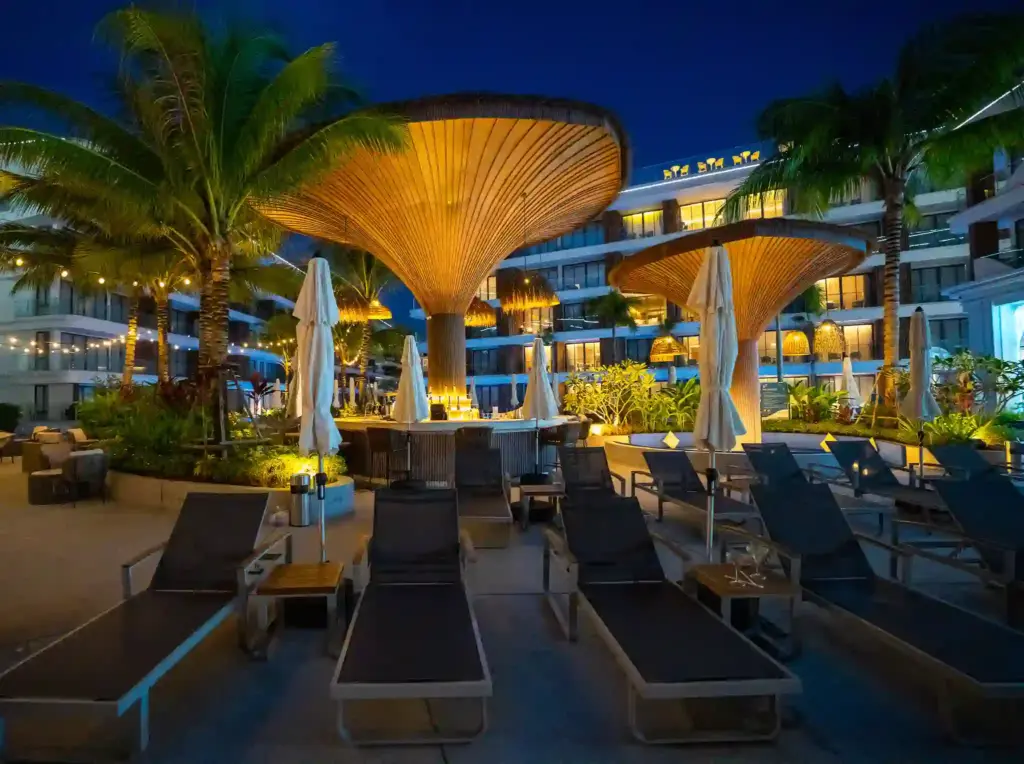
After days of temples, museums and street food, the ease of all this is the luxury.
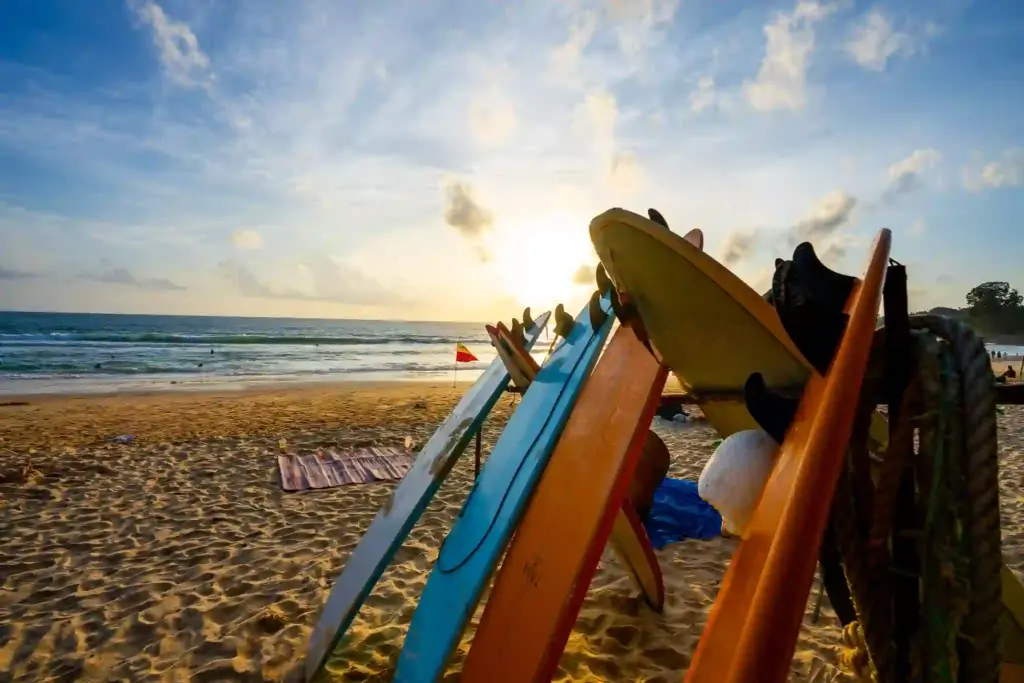
Phuket is warm every day of the year, with a sea that holds near 28 degrees in January and again in July. No beach within reach of Auckland makes that promise. It remains, too, remarkably generous: a dinner that would be a modest outing at home becomes an occasion here, and a beachfront room of real quality costs what a suburban motel does at home.
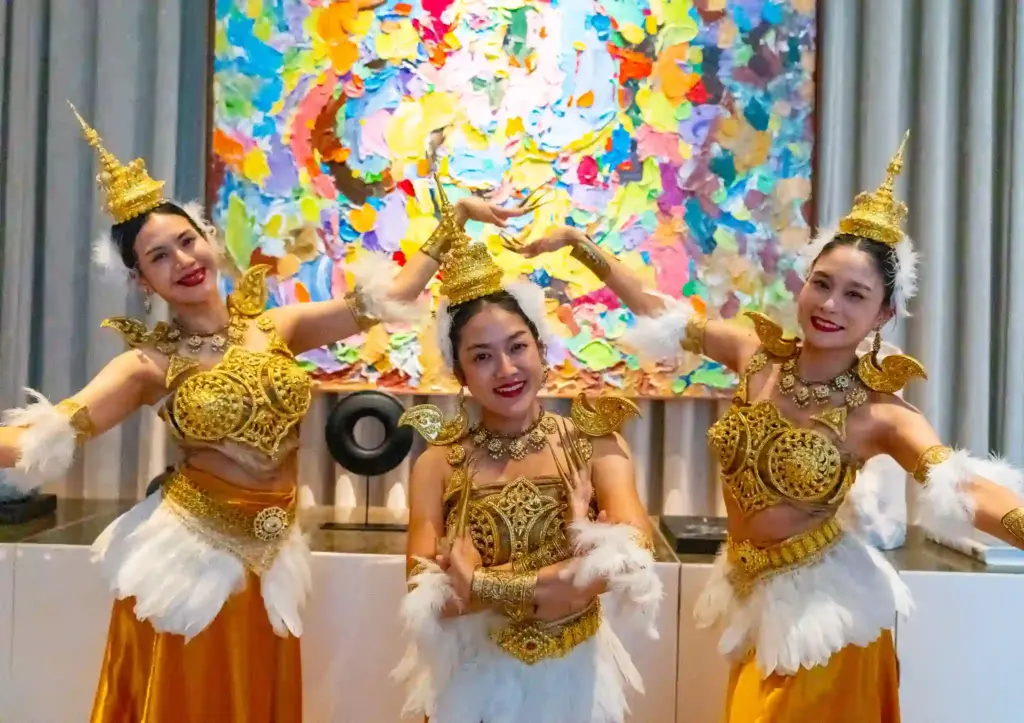
Come for the beach club. Stay for everything behind it…

Recent Comments